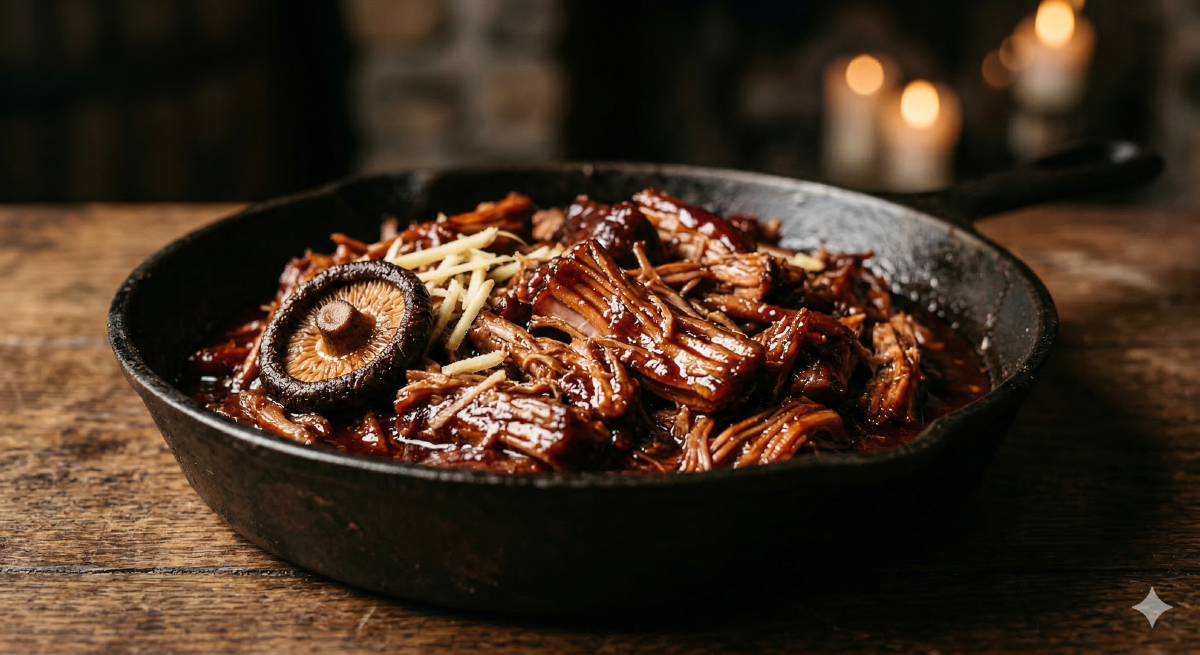
Pork shoulder at $2-3 per pound is the cheapest cut that still delivers 44 grams of protein per serving. The Korean braise tradition — jeyuk — already figured this out. Gochujang provides fermented depth, capsaicin, and probiotics in one paste. The kombu and shiitake add glutamates without MSG. The gelatin in the jus provides glycine, which your body uses for glutathione synthesis and collagen turnover.
Four servings from one Sunday session. Four hours of hands-off time.
Ingredients#
- 3-4 lbs pork shoulder
- 1 cup low-sodium chicken or beef broth
- 2 tbsp gochujang paste
- 1 tbsp white miso
- 1 strip kombu
- 4-5 dried shiitakes
- 1 onion, sliced
- 2 tsp fresh ginger, microplaned
- 2 rosemary sprigs
- 2 tbsp unflavored gelatin powder
- Garlic powder
- Turmeric
- Black pepper
- Gochugaru (sub: red pepper flakes 1:1)
Gold users: Paste this page's URL into Cronometer's Recipe Importer to auto-import with full nutrition data.
Free users: Copy or download the ingredient list below, then paste into Add Food > Create Recipe > Paste Ingredients.
3-4 lbs pork shoulder
1 cup low-sodium chicken or beef broth
2 tbsp gochujang paste
1 tbsp white miso
1 strip kombu
4-5 dried shiitakes
1 onion, sliced
2 tsp fresh ginger, microplaned
2 rosemary sprigs
2 tbsp unflavored gelatin powder
garlic powder
turmeric
black pepper
gochugaru
Instructions#
- Pat the pork shoulder completely dry with paper towels. Season all sides generously with garlic powder, turmeric, black pepper, and gochugaru.
- Heat your cast iron over medium-high. Sear the pork 3-4 minutes per side until a deep crust forms. Do not rush this step.
- Combine the braise liquid: 1 cup broth, 2 tbsp gochujang, 1 tbsp white miso, 1 strip kombu, 4-5 dried shiitakes, sliced onion, 2 tsp microplaned ginger, and 2 rosemary sprigs.
- Pour the braise liquid around the pork. Cover tightly with a lid or foil.
- Transfer to a 300°F oven. Braise 3.5-4 hours until the pork is pull-apart tender.
- Remove the kombu and rosemary sprigs. Shred the pork directly in the braising liquid.
- Whisk 2 tbsp unflavored gelatin powder into the hot jus. Stir until fully dissolved. The jus will thicken to a glossy, clinging sauce as it cools.
- Divide into four containers. Trim visible fat before serving if desired.
Why These Ingredients#
Gochujang is a fermented Korean chili paste — probiotics, capsaicin, and umami depth in one ingredient. Capsaicin has documented thermogenic effects and may support metabolic rate during caloric restriction.
Kombu contributes iodine and fucoidan, a sulfated polysaccharide studied for anti-inflammatory properties. It also provides natural glutamates that deepen the braise without added sodium.
Dried shiitake mushrooms contain eritadenine, which has been shown to lower LDL cholesterol. They also provide vitamin D and selenium — both commonly deficient in CRON protocols.
Gelatin dissolved in the jus delivers glycine without needing specialty bones. Glycine supports glutathione synthesis and has been associated with lifespan extension in animal models. The jus sets to a lightly gelatinous consistency overnight, reheating to a glossy sauce.
Turmeric + black pepper together increase curcumin bioavailability by approximately 2000% due to piperine’s inhibition of hepatic and intestinal glucuronidation.
White miso adds probiotics, manganese, and another layer of umami. Added to the braise liquid rather than the sear, so the live cultures get some protection from direct heat.
One-page PDF. Print it, stick it on the fridge, fill it in each week.
New and seasonal recipes, and what's working. Once a month. No ads, no fluff.