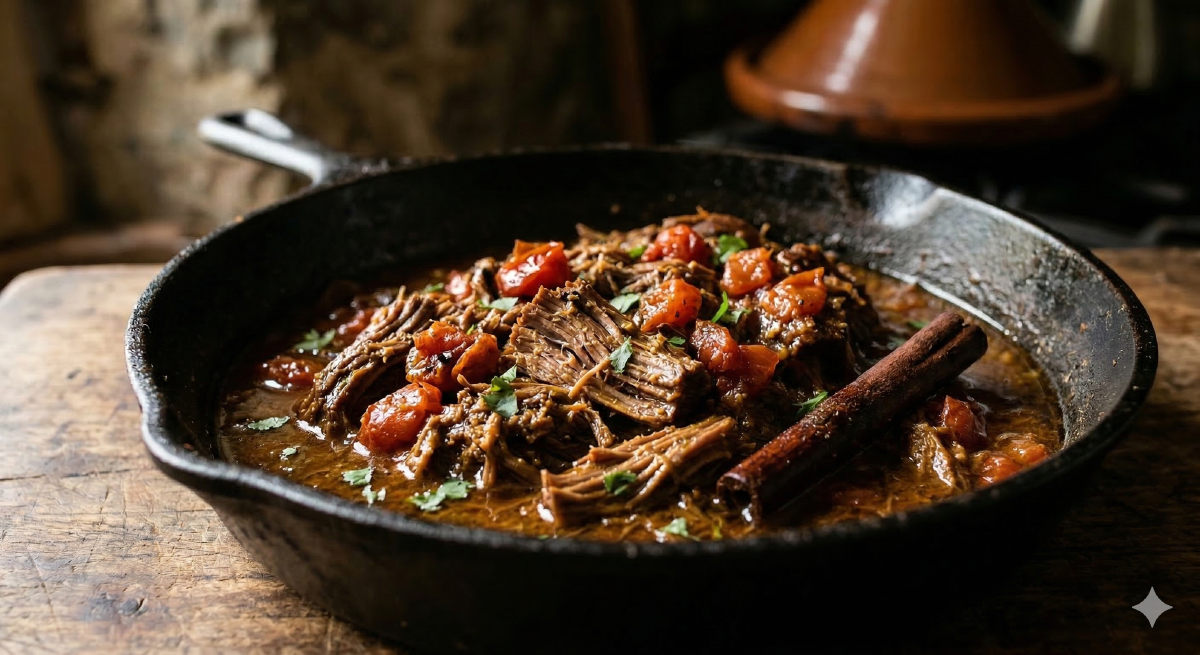
Same cut as the gochujang version, different flavor territory. Pork shoulder at $2-3 per pound takes the North African spice profile just as well as it takes the Korean one. Ras el hanout — literally “head of the shop” — is the spice merchant’s best blend. If you cannot find it premixed, the DIY version below works and costs less.
The technique is identical to the gochujang braise. Sear, build braising liquid, cover, 300 degrees, walk away. The difference is in the aromatics: cinnamon, coriander, cardamom, and cumin replace the gochugaru and gochujang. Same kombu-shiitake-miso-gelatin backbone. Same glycine delivery system in the jus.
Ingredients#
- 3-4 lbs pork shoulder
- 2 tbsp ras el hanout (or DIY blend below)
- 1 can diced tomatoes
- 1 cup low-sodium chicken or beef broth
- 1 strip kombu
- 4-5 dried shiitakes
- 1 tbsp white miso
- 1 cinnamon stick
- 1 onion, sliced
- 2 rosemary sprigs
- 2 tbsp unflavored gelatin powder
DIY Ras el Hanout#
- 1 tsp cumin
- 1/2 tsp coriander
- 1/2 tsp cinnamon
- 1/4 tsp cardamom
- 1/4 tsp turmeric
- 1/4 tsp black pepper
Gold users: Paste this page's URL into Cronometer's Recipe Importer to auto-import with full nutrition data.
Free users: Copy or download the ingredient list below, then paste into Add Food > Create Recipe > Paste Ingredients.
3-4 lbs pork shoulder
2 tbsp ras el hanout
1 can diced tomatoes
1 cup low-sodium broth
1 strip kombu
4-5 dried shiitakes
1 tbsp white miso
1 cinnamon stick
1 onion, sliced
2 rosemary sprigs
2 tbsp unflavored gelatin powder
Instructions#
- Pat the pork shoulder completely dry. Season all sides generously with ras el hanout (or the DIY blend).
- Heat your cast iron over medium-high. Sear the pork 3-4 minutes per side until deeply browned.
- Build the braise: add diced tomatoes, broth, 1 strip kombu, 4-5 dried shiitakes, 1 tbsp white miso, cinnamon stick, sliced onion, and 2 rosemary sprigs around the pork.
- Cover tightly with a lid or foil.
- Transfer to a 300°F oven. Braise 3.5-4 hours until the pork is pull-apart tender.
- Remove the kombu, rosemary sprigs, and cinnamon stick. Shred the pork directly in the braising liquid.
- Whisk 2 tbsp unflavored gelatin powder into the hot Moroccan jus. Stir until fully dissolved. The jus sets to a lightly gelatinous consistency overnight and reheats to a glossy sauce.
- Divide into four containers. Trim visible fat before serving if desired.
Why These Ingredients#
Ras el hanout is a complex spice blend where each component contributes: cumin provides iron and aids digestion, coriander adds manganese, cinnamon modulates blood sugar response, cardamom contains cineole (an anti-inflammatory compound), and turmeric delivers curcumin. The DIY blend gives you control over ratios and avoids the filler starches that pad out some commercial versions.
Diced tomatoes replace the broth-only braise liquid from the gochujang version. They provide lycopene (fat-soluble, so the pork fat aids absorption), vitamin C, and acidity that helps break down connective tissue faster.
Kombu contributes iodine, fucoidan, and glutamates. Same function as in the Korean braise — deepens the liquid without adding sodium.
Dried shiitake provides eritadenine for LDL reduction, vitamin D, and selenium. The mushrooms rehydrate in the braise and become tender enough to eat with the shredded pork.
Gelatin in the jus delivers glycine, hydroxyproline, and proline without needing specialty bones. Glycine is associated with lifespan extension in animal studies and supports glutathione synthesis — your body’s primary endogenous antioxidant.
White miso adds another fermented element, contributing probiotics and manganese. The Moroccan and Japanese flavors do not clash — miso is a background note here, not a lead.
One-page PDF. Print it, stick it on the fridge, fill it in each week.
New and seasonal recipes, and what's working. Once a month. No ads, no fluff.